
Zephyra Dynamics
Why we exist: the Zephyra Dynamics vision
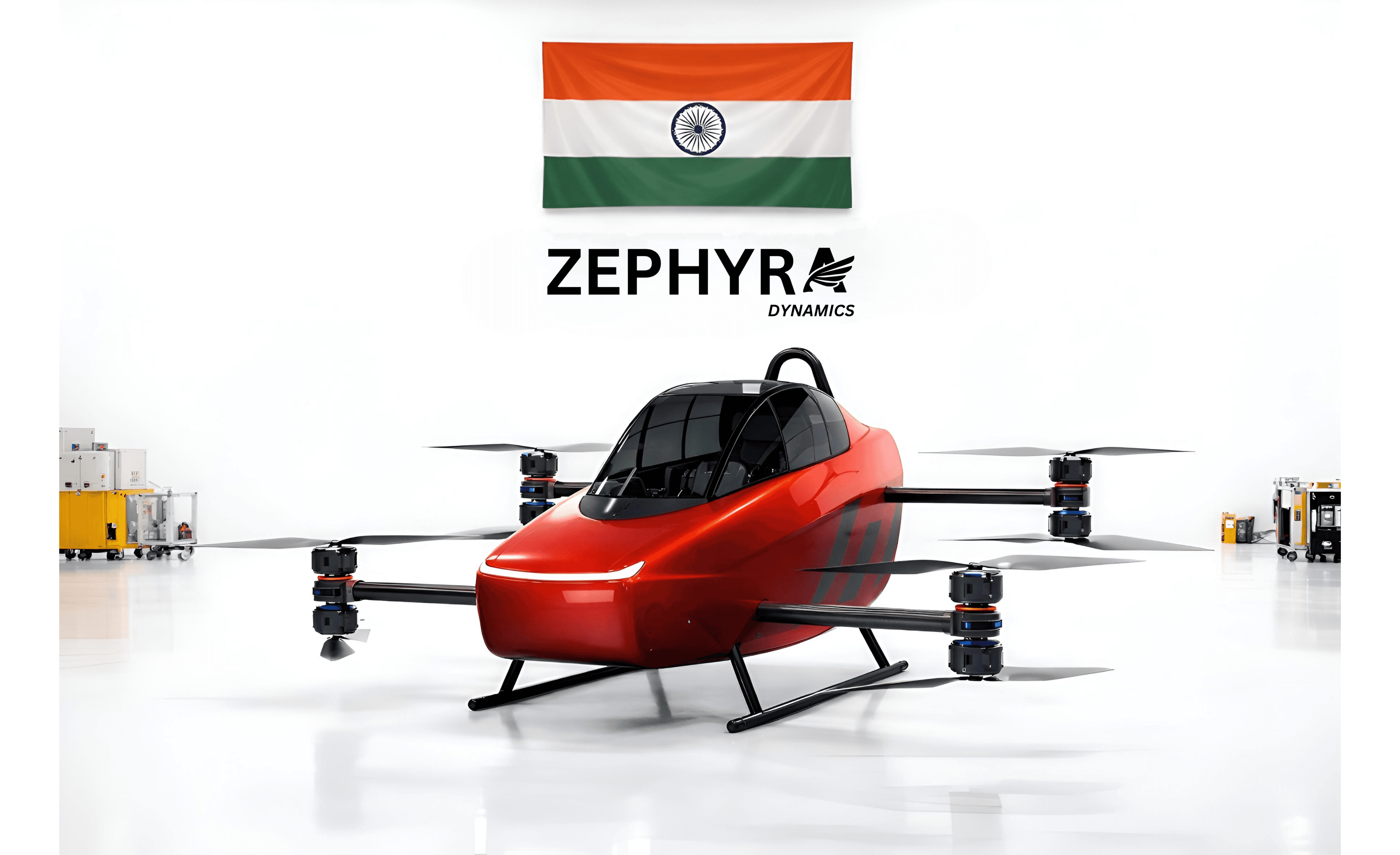
Shaping the future of urban air mobility in India.
0 likes · 0 comments · 0 shares
Traffic does not feel like a technology problem when you are stuck in it. It feels personal, and it is a daily reality for millions of people across Indian cities. Hours disappear into journeys that should take minutes. Emergency vehicles lose critical time on roads that cannot always provide a clear path. Commutes take time away from work, study and family. These are not abstract inefficiencies. They are lived costs, repeated every day in every major city in the country.
Zephyra Dynamics exists because we believe this problem deserves a serious engineering response, and one built specifically for the places where it will operate.
An engineering problem, not a science fiction one
Urban air mobility is often treated as a distant idea, more concept than reality. We see it differently. eVTOL technology is an engineering problem, and one that Indian talent is well positioned to solve for Indian conditions. That means designing around local infrastructure, regulation, climate and operating environments, rather than adapting a system built for a different market and hoping it transfers.
This conviction shaped Zephyra Dynamics from the outset. What began as a small student research initiative at RV College of Engineering grew into a team of more than 45 engineers, and became the foundation for the company we are building today.
Building the whole system
An aircraft cannot operate at scale without an airspace system capable of managing it safely. That is why Zephyra Dynamics is developing both sides of the operation together.
Kestrel X2 is our autonomous, single seat eVTOL aircraft. LAMINAR is the platform designed to coordinate aircraft, routes and vertiports across a network.
We treat these as one connected engineering problem rather than two separate products. Vehicle performance shapes what is possible in route planning. Operational requirements, in turn, shape aircraft and system design. Developing them in parallel, with each informing the other, is central to how we work.
What we are building toward
Our long-term vision is a network of quiet, autonomous aircraft moving people across Indian cities, coordinated by airspace software and supported by a practical vertiport network. That vision does not stop at a working prototype. It requires certification, reliable day to day operations and earned trust from regulators, operators and the public.
The work ahead is to turn validated engineering into a certified flying system, built step by step, with evidence at every stage.
Why it matters
The congestion we are addressing is not hypothetical. It is familiar to everyone who has sat in it. It costs time, it costs opportunity and, at times, it costs more than that. We are building Zephyra Dynamics because that experience is shared by millions of people across the country, and because we believe urban air mobility, built for India by people who understand India, is the right answer.